J’Accuse, Emile Zola, 1898
How can a narrating / argumentating agent convince a receiving agent of the sincerity of what motivates them and feeds their opinions and the truthfulness of the facts they report?

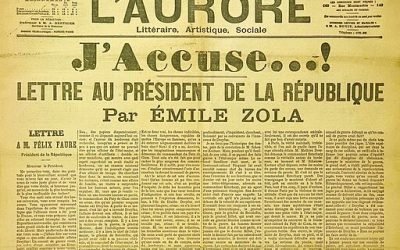
J’Accuse, Emile Zola, 1898
How can a narrating / argumentating agent convince a receiving agent of the sincerity of what motivates them and feeds their opinions and the truthfulness of the facts they report?

Nineteen Eighty-four (1984), George Orwell, 1946
The components of a fictional world far from the reality of the receiving agent should be derived from a coherent and consistent logic to guarantee the latter’s adhesion.

Of Mice and Men, John Steinbeck, 1937
The cohesion factor can be applied to connect an element of the plot to the values and objectives created by the initial event.

Of Mice and Men, John Steinbeck, 1937
The central objective of the plot may not be achieved in the end.

Nineteen Eighty-four (1984), George Orwell, 1946
It is possible to generate emotion by confronting the traits of a protagonist with the values of the world to which they belong.

Nineteen Eighty-four (1984), George Orwell, 1946
The illogical behavior of a protagonist is plausible if it contributes to the identity of the world in which they belong.
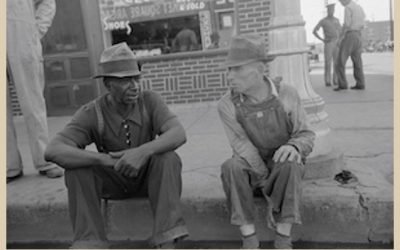
Of Mice and Men, John Steinbeck, 1937.
A question can be a verbal action that serves a specific function for the person who asks it.
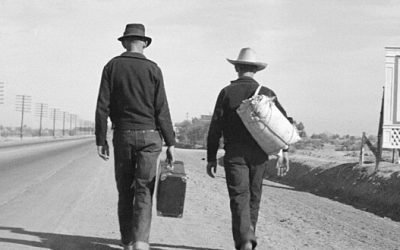
Of Mice and Men, John Steinbeck, 1937
The traits of the secondary characters, when put in cohesion with those of the protagonist, constitute an implicit commentary from the narrating agent offered for our interpretation (cognitive function).
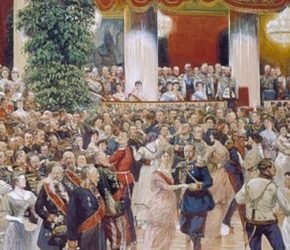
Anna Karenina (Анна Каренина), Leo Tolstoy, 1877
A verbal action can create a revealing event belonging to a reality that a character tries to ignore.

To the Lighthouse Virginia Woolf, 1927
Politics is the art of lying about things (Voltaire).

To the Lighthouse, Virginia Woolf, 1927
Having access to information that the characters do not (yet) know can do much more than flatter the ego of the receiving agent.

1984, George Orwell, 1949.
The extradiegetic narrating agent benefiting from “internal focalization” can give the impression of having some influence (stakes and risks factor) on the characters’ thoughts.
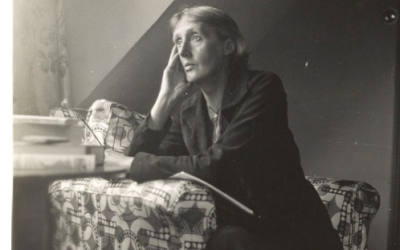
To the Lighthouse Virginia Woolf, 1927
Unlimited internal focalization: the narrating agent and several characters of the plot (number factor) have access to the thoughts of all characters.

A Farewell to Arms, Ernest Hemingway, 1929.
Applying the retention factor to the style of a description can impose specific meaning.

To the Lighthouse, Virginia Woolf, 1927.
Landscapes can connect characters emotionally without their needing to express themselves.

Of Mice and Men, John Steinbeck, 1937.
The speed factor can imply a form of commentary by the narrating agent on the events of the plot.
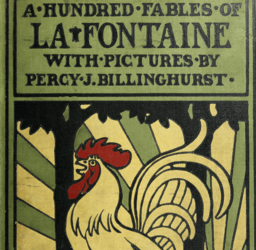
Epistle to Monseigneur le Dauphin, Jean de la Fontaine, 1668
The receiving agent sometimes needs to be encouraged, at the beginning of a narrative, to give their attention and trust to the narrating agent. Here the “implicit author” explains his intentions to a seven-year-old child.

Father Goriot – Le Père Goriot, Honoré de Balzac, 1842
When characters do not openly express their desires, the cohesion of their actions can provide a clue to their inner worlds.

Nineteen Eighty-four (1984), George Orwell, 1946
Conveying one protagonist’s assumptions about another character’s unknown intentions (retention factor) can be a way of revealing the former’s state of mind.

Father Goriot-Le Père Goriot, Honoré de Balzac, 1842
What the characters do not say or do is part of the narrative. Not reacting (retention factor) can be a form of reaction that carries meaning (“subtext”).
Applying the distance factor to descriptive elements can constitute a form of commentary on the described world and situation(s)
A description interrupts the narrative of the plot (speed factor) and directs the attention of the receiving agent to something else.

Indirect speech is a form of descriptive discourse (an agent describes what was said) which can carry subtext.

L’amica geniale (My Brillant Friend), Elena Ferrante, transl. Ann Goldstein, 2011
A narration can explore possible causal links between events in the plot (correlation).

The stakes and risks associated with the characters’ environment are potentially the source of surprises rich in insight.
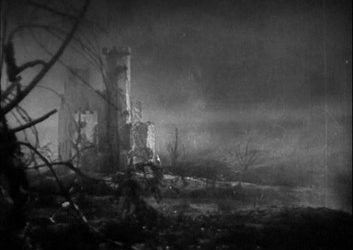
The receiving agent can share the emotions of the narrating agent if these are provoked by the stakes and risks generated by the world of the plot.

A hypothesis about the meaning of an event can be the beginning of a reflection spanning an entire sequence of events (cohesion factor)
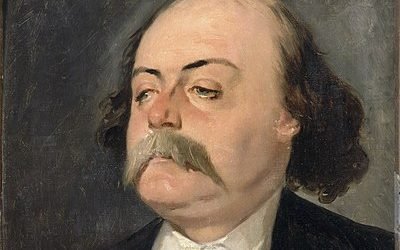
Madame Bovary Gustave Flaubert, 1857. Transl. by Eleanor Marx-Aveling.
The narrating agent, who is a character in a fictional world, is influenced by its values. Their comments and argumentative discourses can be useful in prompting the receiving agent to question whether or not they adhere to their ideas, mentality, subjectivity.
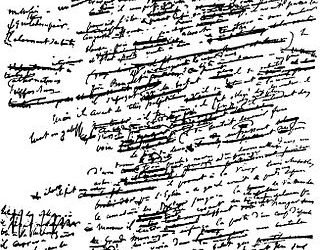
Madame Bovary, Gustave Flaubert, 1857
The extradiegetic narrating agent is always limited in their apprehension of the plot. The implicit author is free to exploit these limits.
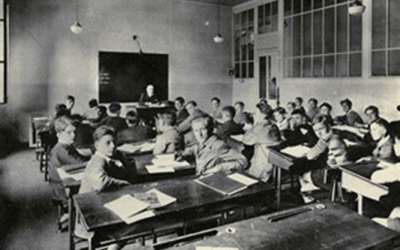
Madame Bovary, Gustave Flaubert, 1857
The plausibility of a world depends, among other things, on the knowledge and skill competence of the narrating agent. How, in 1857, did Flaubert, a young author just starting out, manage to convince his readership of his competence?

FLAUBERT (Gustave) Madame Bovary, 1857
Cohesion can be an open door to interpreting the meaning of a discourse.

Madame Bovary, Gustave FLAUBERT, 1856
The Narrative Pact requires a credible plot world. There are several ways to make a world viable, one of them is to expose (to describe) how its constituents contribute to its functioning. In this case, the plausibility factor is applied to the narrative tool we call description.
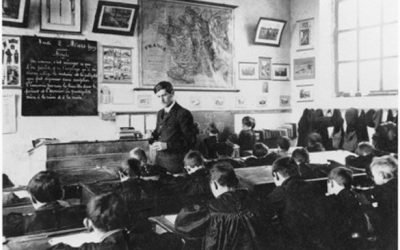
Madame Bovary (1857) Gustave Flaubert
One of the most common type of cohesion factors between characters and the world to which they belong is conformism.

Reveries of the solitary Walker, Jean-Jacques ROUSSEAU, 1778.
Emotion is created by applying the cohesion factor to the descriptive discourse tool. The landscape described is analogous to the state of mind of the describing agent.
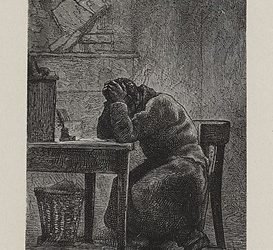
Les Misérables, 1862
The quantity (number factor) of an element of the narrative can carry meaning or participate in the expression of an emotion.

Les Misérables, 1862
An argumentation can influence the plot (=the choice of a new action) if the stakes and possible risks are concrete and generate strong emotions.
Anna Karenina, Tolstoy (Leo), 1878
Multidimensional characters may have inner dimensions that are at odds (cohesion/contradiction factor) with those that motivate them in their public life (explicit objectives and strategy).

Nineteen Eighty-four (1984), George Orwell, 1946
The story of a character provides the cohesion that binds them to another character of the plot.

Of Mice and Men, John Steinbeck, 1937.
The retention factor can be applied to an event to convey elements of characterization.
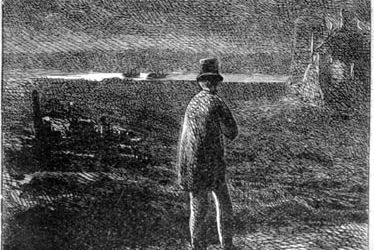
Great Expectations, Charles Dickens, 1860
Emotions can filter a viewpoint and cause someone to see only that which confirms their state of mind. If that person is a narrating agent, the retention factor is applied to their narrative/description.

Discover here an extract from a narrative work, complete with commentary, to inspire you—whether you wish to emulate it, reimagine it, or do the exact opposite.

Discover here an extract from a narrative work, complete with commentary, to inspire you—whether you wish to emulate it, reimagine it, or do the exact opposite.

Discover here an extract from a narrative work, complete with commentary, to inspire you—whether you wish to emulate it, reimagine it, or do the exact opposite.

Discover here an extract from a narrative work, complete with commentary, to inspire you—whether you wish to emulate it, reimagine it, or do the exact opposite.

Discover here an extract from a narrative work, complete with commentary, to inspire you—whether you wish to emulate it, reimagine it, or do the exact opposite.

Discover here an extract from a narrative work, complete with commentary, to inspire you—whether you wish to emulate it, reimagine it, or do the exact opposite.

Discover here an extract from a narrative work, complete with commentary, to inspire you—whether you wish to emulate it, reimagine it, or do the exact opposite.

Discover here an extract from a narrative work, complete with commentary, to inspire you—whether you wish to emulate it, reimagine it, or do the exact opposite.

Discover here an extract from a narrative work, complete with commentary, to inspire you—whether you wish to emulate it, reimagine it, or do the exact opposite.

Discover here an extract from a narrative work, complete with commentary, to inspire you—whether you wish to emulate it, reimagine it, or do the exact opposite.

Discover here an extract from a narrative work, complete with commentary, to inspire you—whether you wish to emulate it, reimagine it, or do the exact opposite.

Discover here an extract from a narrative work, complete with commentary, to inspire you—whether you wish to emulate it, reimagine it, or do the exact opposite.
Log in for more »
