The Man with the Golden Arm, 1955
Two inner worlds meet and create a collective emotions world. The retention of speech reinforces the impression of having to deal with a form of intrusion (one inner world “invades” the other)


The Man with the Golden Arm, 1955
Two inner worlds meet and create a collective emotions world. The retention of speech reinforces the impression of having to deal with a form of intrusion (one inner world “invades” the other)

Of Mice and Men, John Steinbeck, 1937
The cohesion factor can be applied to connect an element of the plot to the values and objectives created by the initial event.

Nineteen Eighty-four (1984), George Orwell, 1946
It is possible to generate emotion by confronting the traits of a protagonist with the values of the world to which they belong.
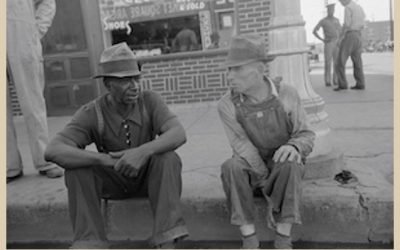
Of Mice and Men, John Steinbeck, 1937.
A question can be a verbal action that serves a specific function for the person who asks it.
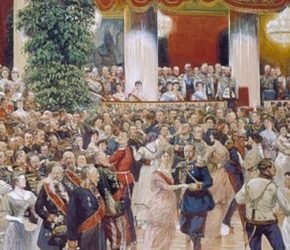
Anna Karenina (Анна Каренина), Leo Tolstoy, 1877
A verbal action can create a revealing event belonging to a reality that a character tries to ignore.
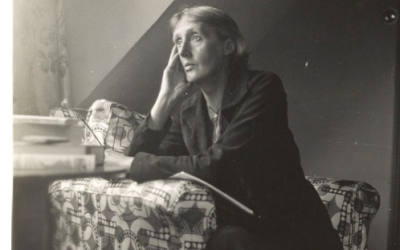
To the Lighthouse Virginia Woolf, 1927
Unlimited internal focalization: the narrating agent and several characters of the plot (number factor) have access to the thoughts of all characters.

To the Lighthouse, Virginia Woolf, 1927.
Landscapes can connect characters emotionally without their needing to express themselves.

Propaganda poster of the Vichy regime by a collective of poster artists from Lyon 1940-1944
Arousing the emotion of the receiving agent by applying the cohesion factor to a propagandist argument.

Hannibal and his Army Crossing the Alps , J. M. W. Turner,1812
This still image, therefore partially narrative, has as its subject the obstacle of a contingent event, a storm, a natural phenomenon that is difficult to predict and has potentially catastrophic consequences.

The Scream, Edvard Munch, 1893.
A homodiegetic narrating agent can connect (cohesion factor) the world of the plot, in which a contingent event takes place, to his inner world and thus make sense of chance.

Andy Warhol Eating a Hamburger by Jorgen Leth (1981)
A protagonist doesn’t know what to do. He deals with this obstacle innocently (sincerity factor).

Nineteen Eighty-four (1984), George Orwell, 1946
Conveying one protagonist’s assumptions about another character’s unknown intentions (retention factor) can be a way of revealing the former’s state of mind.

The Scream, Edvard Munch, 1893
Edvard Munch recalls a personal experience to convey a powerful and devastating emotion. This skill has given this painting its iconic image status.
A description can be in cohesion with the inner world of a protagonist.
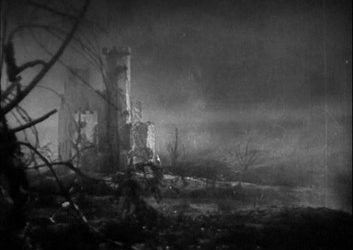
The receiving agent can share the emotions of the narrating agent if these are provoked by the stakes and risks generated by the world of the plot.

Sideways, Alexander Payne, Jim Taylor, 2004
An emotional experience is created by applying the sincerity factor to the descriptive tool, when the character reveals a personal truth without realizing it.

The Man with the Golden Arm, 1955
The narrating agent can introduce a collateral obstacle (not directly related to the plot) but relevant to the plot, in the form of a secondary character whose purpose and actions (verbal or physical) oppose (cohesion/contradiction factor) those of the protagonist.

The Man with the Golden Arm, 1955
The repetition of a verbal action, potentially opposing for the protagonist, establishes its persistence, omnipresence, even inevitability.
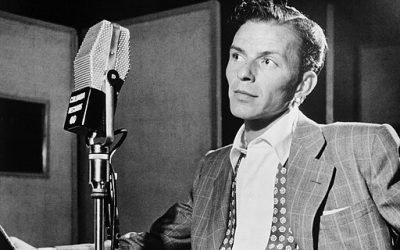
The Man with the Golden Arm, 1955
A “setup” or “planting” (information revealed to the receiving agent but not to the protagonist) can be a way of heightening the emotional impact created by a functional event.

Oppenheimer, 2023
The poetic-lyric tool and abstract notions can cohere (application of the cohesion factor) into an emotional experience.

Reveries of the solitary Walker, Jean-Jacques ROUSSEAU, 1778.
Emotion is created by applying the cohesion factor to the descriptive discourse tool. The landscape described is analogous to the state of mind of the describing agent.
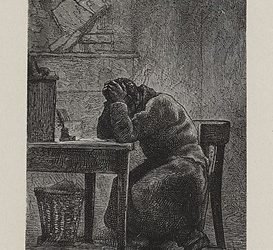
Les Misérables, 1862
The quantity (number factor) of an element of the narrative can carry meaning or participate in the expression of an emotion.

Les Misérables, 1862
An argumentation can influence the plot (=the choice of a new action) if the stakes and possible risks are concrete and generate strong emotions.

Cyrano de Bergerac, 1897, a play by Edmond Rostand.
We propose here to go through all the stages of the narrative creative process, from the initial idea to the specific contributions of a narrating agent to the narrative, illustrating them with examples taken from Cyrano de Bergerac.

Ratatouille, written by LEWIS (Brad), 2007
Animated films and comic strips are laboratories for the treatment of believability. They allow us to push the limits of reality and the truths that a narrating agent believes they can deduce.

City Lights, Charlie Chaplin, United Artists, 1931
Each obstacle in the events that precede and follow a particular situation can be linked by the cohesion factor.
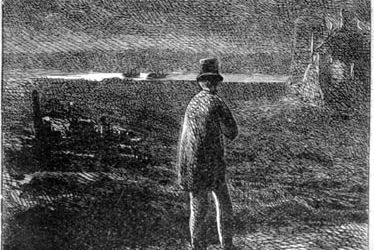
Great Expectations, Charles Dickens, 1860
Emotions can filter a viewpoint and cause someone to see only that which confirms their state of mind. If that person is a narrating agent, the retention factor is applied to their narrative/description.

Discover here an extract from a narrative work, complete with commentary, to inspire you—whether you wish to emulate it, reimagine it, or do the exact opposite.

Discover here an extract from a narrative work, complete with commentary, to inspire you—whether you wish to emulate it, reimagine it, or do the exact opposite.

Discover here an extract from a narrative work, complete with commentary, to inspire you—whether you wish to emulate it, reimagine it, or do the exact opposite.

Discover here an extract from a narrative work, complete with commentary, to inspire you—whether you wish to emulate it, reimagine it, or do the exact opposite.

Discover here an extract from a narrative work, complete with commentary, to inspire you—whether you wish to emulate it, reimagine it, or do the exact opposite.

Discover here an extract from a narrative work, complete with commentary, to inspire you—whether you wish to emulate it, reimagine it, or do the exact opposite.

Discover here an extract from a narrative work, complete with commentary, to inspire you—whether you wish to emulate it, reimagine it, or do the exact opposite.

Discover here an extract from a narrative work, complete with commentary, to inspire you—whether you wish to emulate it, reimagine it, or do the exact opposite.

Discover here an extract from a narrative work, complete with commentary, to inspire you—whether you wish to emulate it, reimagine it, or do the exact opposite.

Discover here an extract from a narrative work, complete with commentary, to inspire you—whether you wish to emulate it, reimagine it, or do the exact opposite.

Discover here an extract from a narrative work, complete with commentary, to inspire you—whether you wish to emulate it, reimagine it, or do the exact opposite.
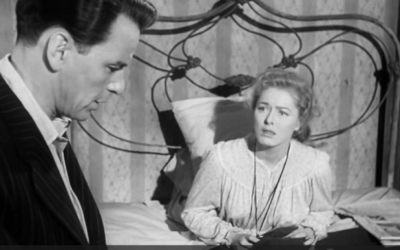
The Man with the Golden Arm, 1955
The values of the protagonist’s world may conflict (cohesion factor) with those of the world of the plot.

Discover here an extract from a narrative work, complete with commentary, to inspire you—whether you wish to emulate it, reimagine it, or do the exact opposite.
Log in for more »
