
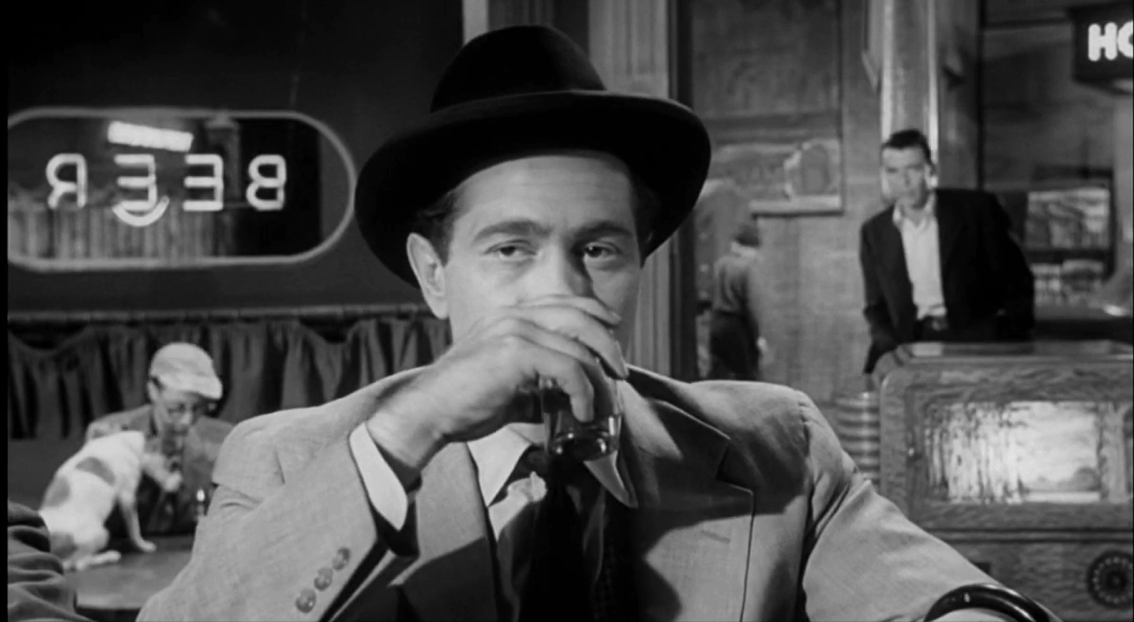
The Man with the Golden Arm, 1955, based on a novel by Nelson Agren, screenplay by Walter Newman, Ben Hecht, directed by Otto Preminger.
Desires and two inner worlds meet and create a collective emotions world. The retention of speech reinforces the impression of having to deal with a form of intrusion (one character’s inner world and desires “invades” the other)
Frankie Machine, a former drug addict turned musician, tries to resist the solicitations of his underworld neighborhood and his own desires. But the pressure is too great, and he finally decides to accept the drugs that his former dealer, Louie, has repeatedly offered him.
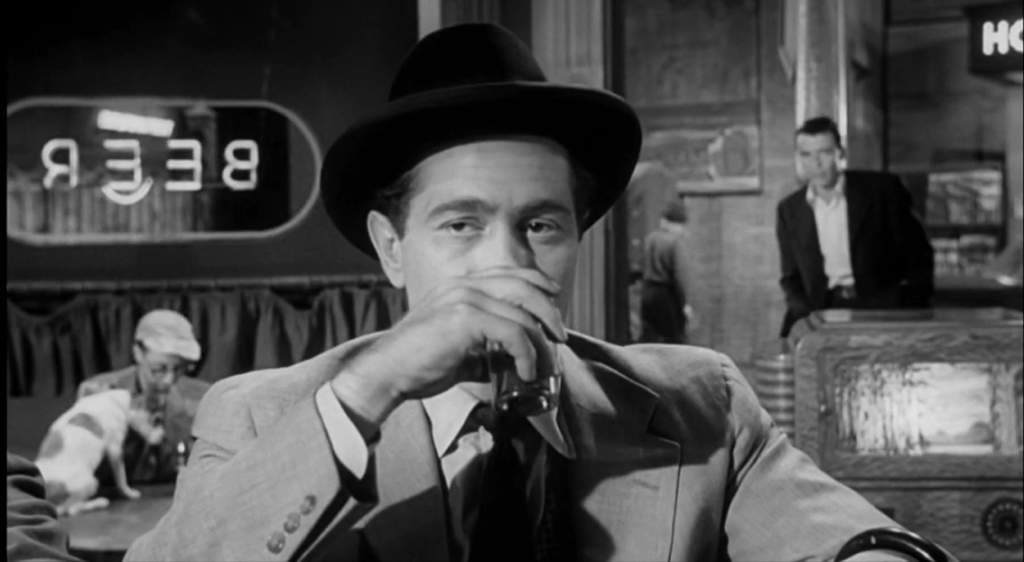
In this scene, Frankie’s arrival at the café where his friend Sparrow, a dog thief, is waiting, is a double event. For Louie, leaning at the bar, it is a surprise to realize that Frankie has finally let his guard down (interpersonal, “adjuvant”). For Frankie, it’s the realization that he won’t be able to keep his promise to “change his life” (interpersonal, opponent).
No sooner does Frankie show up at the café door than the drug dealer understands what’s going on in his head.
Without any explanation from Frankie, Louie “reads” his customer’s desires, and Frankie understands that the drug dealer has understood. A collective emotions world around addiction is created.
Louis demonstrates an emotional intelligence and a gift for interpreting Frankie’s body language (characterization) that make him a formidable, diabolical adversary.
