Of Mice and Men, John Steinbeck, 1937
The central objective of the plot may not be achieved in the end.


Of Mice and Men, John Steinbeck, 1937
The central objective of the plot may not be achieved in the end.
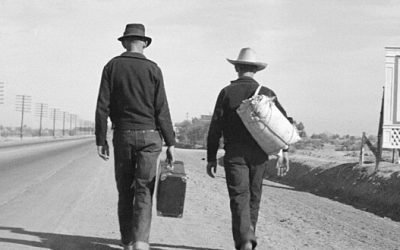
Of Mice and Men, John Steinbeck, 1937
The traits of the secondary characters, when put in cohesion with those of the protagonist, constitute an implicit commentary from the narrating agent offered for our interpretation (cognitive function).

To the Lighthouse Virginia Woolf, 1927
Politics is the art of lying about things (Voltaire).

To the Lighthouse, Virginia Woolf, 1927
Having access to information that the characters do not (yet) know can do much more than flatter the ego of the receiving agent.

1984, George Orwell, 1949.
The extradiegetic narrating agent benefiting from “internal focalization” can give the impression of having some influence (stakes and risks factor) on the characters’ thoughts.

To the Lighthouse, Virginia Woolf, 1927
Who else but the “implicit author” can be behind the agent anonymously producing a narrative?
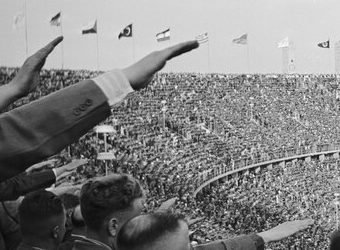
Nineteen Eighty-four (1984), George Orwell, 1946
Cohesion can contribute to the believability of a fictional world.

A Farewell to Arms, Ernest Hemingway, 1929.
Applying the retention factor to the style of a description can impose specific meaning.
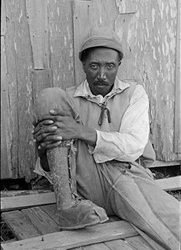
Of Mice and Men, John Steinbeck, 1937.
The speed factor can imply a form of commentary by the narrating agent on the events of the plot.

Father Goriot – Le Père Goriot, Honoré de Balzac, 1842
When characters do not openly express their desires, the cohesion of their actions can provide a clue to their inner worlds.

Father Goriot-Le Père Goriot, Honoré de Balzac, 1842
What the characters do not say or do is part of the narrative. Not reacting (retention factor) can be a form of reaction that carries meaning (“subtext”).
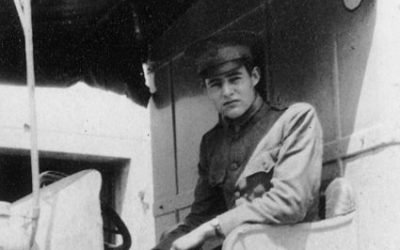
Applying the distance factor to descriptive elements can constitute a form of commentary on the described world and situation(s)
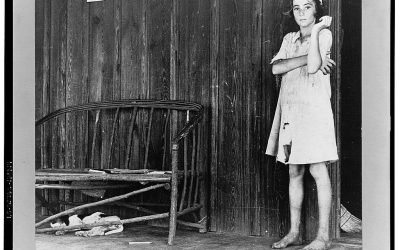
A description interrupts the narrative of the plot (speed factor) and directs the attention of the receiving agent to something else.

Indirect speech is a form of descriptive discourse (an agent describes what was said) which can carry subtext.

L’amica geniale (My Brillant Friend), Elena Ferrante, transl. Ann Goldstein, 2011
A narration can explore possible causal links between events in the plot (correlation).

The stakes and risks associated with the characters’ environment are potentially the source of surprises rich in insight.

A hypothesis about the meaning of an event can be the beginning of a reflection spanning an entire sequence of events (cohesion factor)
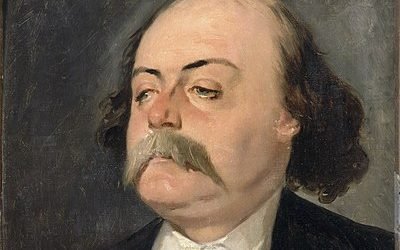
Madame Bovary Gustave Flaubert, 1857. Transl. by Eleanor Marx-Aveling.
The narrating agent, who is a character in a fictional world, is influenced by its values. Their comments and argumentative discourses can be useful in prompting the receiving agent to question whether or not they adhere to their ideas, mentality, subjectivity.
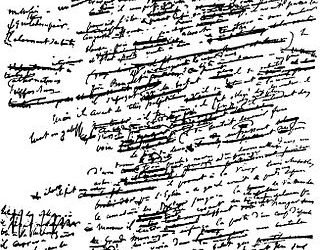
Madame Bovary, Gustave Flaubert, 1857
The extradiegetic narrating agent is always limited in their apprehension of the plot. The implicit author is free to exploit these limits.

FLAUBERT (Gustave) Madame Bovary, 1857
Cohesion can be an open door to interpreting the meaning of a discourse.
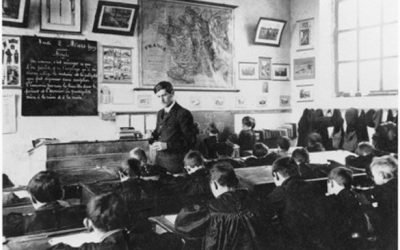
Madame Bovary (1857) Gustave Flaubert
One of the most common type of cohesion factors between characters and the world to which they belong is conformism.
Anna Karenina, Tolstoy (Leo), 1878
Multidimensional characters may have inner dimensions that are at odds (cohesion/contradiction factor) with those that motivate them in their public life (explicit objectives and strategy).

Nineteen Eighty-four (1984), George Orwell, 1946
The story of a character provides the cohesion that binds them to another character of the plot.

Of Mice and Men, John Steinbeck, 1937.
The retention factor can be applied to an event to convey elements of characterization.

Discover here an extract from a narrative work, complete with commentary, to inspire you—whether you wish to emulate it, reimagine it, or do the exact opposite.

Discover here an extract from a narrative work, complete with commentary, to inspire you—whether you wish to emulate it, reimagine it, or do the exact opposite.

Discover here an extract from a narrative work, complete with commentary, to inspire you—whether you wish to emulate it, reimagine it, or do the exact opposite.

Discover here an extract from a narrative work, complete with commentary, to inspire you—whether you wish to emulate it, reimagine it, or do the exact opposite.

Discover here an extract from a narrative work, complete with commentary, to inspire you—whether you wish to emulate it, reimagine it, or do the exact opposite.

Discover here an extract from a narrative work, complete with commentary, to inspire you—whether you wish to emulate it, reimagine it, or do the exact opposite.

Discover here an extract from a narrative work, complete with commentary, to inspire you—whether you wish to emulate it, reimagine it, or do the exact opposite.

Discover here an extract from a narrative work, complete with commentary, to inspire you—whether you wish to emulate it, reimagine it, or do the exact opposite.

Discover here an extract from a narrative work, complete with commentary, to inspire you—whether you wish to emulate it, reimagine it, or do the exact opposite.

Discover here an extract from a narrative work, complete with commentary, to inspire you—whether you wish to emulate it, reimagine it, or do the exact opposite.

Discover here an extract from a narrative work, complete with commentary, to inspire you—whether you wish to emulate it, reimagine it, or do the exact opposite.

Discover here an extract from a narrative work, complete with commentary, to inspire you—whether you wish to emulate it, reimagine it, or do the exact opposite.
Log in for more »
