Anna Karenina (Анна Каренина), Leo Tolstoy, 1877
A verbal action can create a revealing event belonging to a reality that a character tries to ignore.

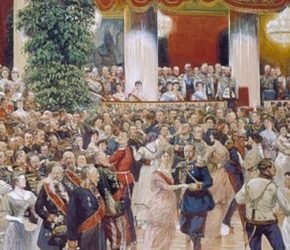
Anna Karenina (Анна Каренина), Leo Tolstoy, 1877
A verbal action can create a revealing event belonging to a reality that a character tries to ignore.

1984, George Orwell, 1949.
The extradiegetic narrating agent benefiting from “internal focalization” can give the impression of having some influence (stakes and risks factor) on the characters’ thoughts.
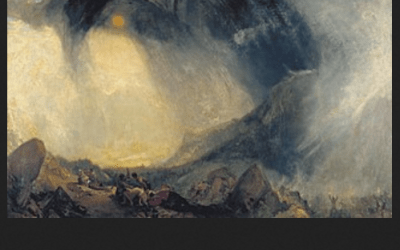
Hannibal and his Army Crossing the Alps , J. M. W. Turner,1812
This still image, therefore partially narrative, has as its subject the obstacle of a contingent event, a storm, a natural phenomenon that is difficult to predict and has potentially catastrophic consequences.
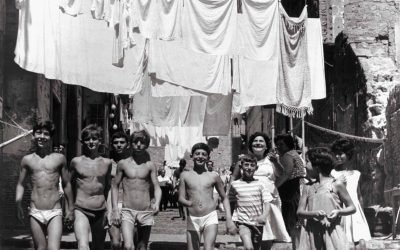
The stakes and risks associated with the characters’ environment are potentially the source of surprises rich in insight.
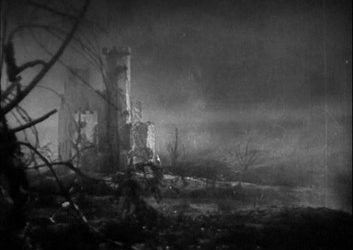
The receiving agent can share the emotions of the narrating agent if these are provoked by the stakes and risks generated by the world of the plot.
A hypothesis about the meaning of an event can be the beginning of a reflection spanning an entire sequence of events (cohesion factor)

The Man with the Golden Arm, 1955
The repetition of a verbal action, potentially opposing for the protagonist, establishes its persistence, omnipresence, even inevitability.

The Man with the Golden Arm, 1955, based on a novel by Nelson Agren, screenplay by Walter Newman, Ben Hecht, directed by Otto Preminger.
The varying distance between the subject and the camera can suggest varying degrees of fear felt by the protagonist (application of the stakes and risks factor).
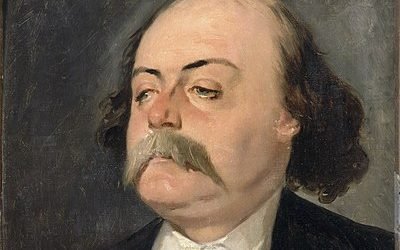
Madame Bovary Gustave Flaubert, 1857. Transl. by Eleanor Marx-Aveling.
The narrating agent, who is a character in a fictional world, is influenced by its values. Their comments and argumentative discourses can be useful in prompting the receiving agent to question whether or not they adhere to their ideas, mentality, subjectivity.

Les Misérables, 1862
An argumentation can influence the plot (=the choice of a new action) if the stakes and possible risks are concrete and generate strong emotions.

Cyrano de Bergerac, 1897, a play by Edmond Rostand.
We propose here to go through all the stages of the narrative creative process, from the initial idea to the specific contributions of a narrating agent to the narrative, illustrating them with examples taken from Cyrano de Bergerac.

Mad Men, TV Series created by Matthew Weiner
The world of the plot is made up of many potential obstacles. Whether at work, at home or at play, a protagonist may have to solve a wide variety of problems.

Discover here an extract from a narrative work, complete with commentary, to inspire you—whether you wish to emulate it, reimagine it, or do the exact opposite.

Discover here an extract from a narrative work, complete with commentary, to inspire you—whether you wish to emulate it, reimagine it, or do the exact opposite.
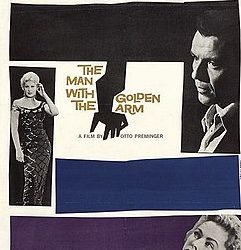
The Man with the Golden Arm, 1955, directed by Otto Preminger
The narrating agent can select elements in a world that are likely to hinder the protagonist’s pursuit of their explicit objective (application of the stakes-risks factor to a description).

Discover here an extract from a narrative work, complete with commentary, to inspire you—whether you wish to emulate it, reimagine it, or do the exact opposite.

Discover here an extract from a narrative work, complete with commentary, to inspire you—whether you wish to emulate it, reimagine it, or do the exact opposite.

Discover here an extract from a narrative work, complete with commentary, to inspire you—whether you wish to emulate it, reimagine it, or do the exact opposite.

Discover here an extract from a narrative work, complete with commentary, to inspire you—whether you wish to emulate it, reimagine it, or do the exact opposite.

Discover here an extract from a narrative work, complete with commentary, to inspire you—whether you wish to emulate it, reimagine it, or do the exact opposite.

Discover here an extract from a narrative work, complete with commentary, to inspire you—whether you wish to emulate it, reimagine it, or do the exact opposite.

Discover here an extract from a narrative work, complete with commentary, to inspire you—whether you wish to emulate it, reimagine it, or do the exact opposite.

Discover here an extract from a narrative work, complete with commentary, to inspire you—whether you wish to emulate it, reimagine it, or do the exact opposite.

Discover here an extract from a narrative work, complete with commentary, to inspire you—whether you wish to emulate it, reimagine it, or do the exact opposite.

Discover here an extract from a narrative work, complete with commentary, to inspire you—whether you wish to emulate it, reimagine it, or do the exact opposite.
Log in for more »
