Nineteen Eighty-four (1984), George Orwell, 1946
It is possible to generate emotion by confronting the traits of a protagonist with the values of the world to which they belong.


Nineteen Eighty-four (1984), George Orwell, 1946
It is possible to generate emotion by confronting the traits of a protagonist with the values of the world to which they belong.

Nineteen Eighty-four (1984), George Orwell, 1946
The illogical behavior of a protagonist is plausible if it contributes to the identity of the world in which they belong.
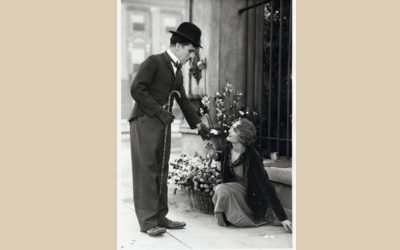
City Lights, Charlie Chaplin, 1931
The dominant traits of secondary characters are sometimes chosen based on the obstacles they can potentially represent for the protagonist (cohesion factor).

Romeo and Juliet, William Shakespeare, 1597.
Characters can take risks; they just have to be given good reasons (plausibility factor).
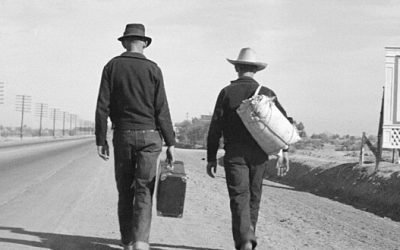
Of Mice and Men, John Steinbeck, 1937
The traits of the secondary characters, when put in cohesion with those of the protagonist, constitute an implicit commentary from the narrating agent offered for our interpretation (cognitive function).

Cyrano de Bergerac, 1897, a play by Edmond Rostand.
We propose here to go through all the stages of the narrative creative process, from the initial idea to the specific contributions of a narrating agent to the narrative, illustrating them with examples taken from Cyrano de Bergerac.
Of Mice and Men, John Steinbeck, 1937.
The retention factor can be applied to an event to convey elements of characterization.

Discover here an extract from a narrative work, complete with commentary, to inspire you—whether you wish to emulate it, reimagine it, or do the exact opposite.

Discover here an extract from a narrative work, complete with commentary, to inspire you—whether you wish to emulate it, reimagine it, or do the exact opposite.

Discover here an extract from a narrative work, complete with commentary, to inspire you—whether you wish to emulate it, reimagine it, or do the exact opposite.

Discover here an extract from a narrative work, complete with commentary, to inspire you—whether you wish to emulate it, reimagine it, or do the exact opposite.

Discover here an extract from a narrative work, complete with commentary, to inspire you—whether you wish to emulate it, reimagine it, or do the exact opposite.

Discover here an extract from a narrative work, complete with commentary, to inspire you—whether you wish to emulate it, reimagine it, or do the exact opposite.

Discover here an extract from a narrative work, complete with commentary, to inspire you—whether you wish to emulate it, reimagine it, or do the exact opposite.

Discover here an extract from a narrative work, complete with commentary, to inspire you—whether you wish to emulate it, reimagine it, or do the exact opposite.

Discover here an extract from a narrative work, complete with commentary, to inspire you—whether you wish to emulate it, reimagine it, or do the exact opposite.

Discover here an extract from a narrative work, complete with commentary, to inspire you—whether you wish to emulate it, reimagine it, or do the exact opposite.

Discover here an extract from a narrative work, complete with commentary, to inspire you—whether you wish to emulate it, reimagine it, or do the exact opposite.

Discover here an extract from a narrative work, complete with commentary, to inspire you—whether you wish to emulate it, reimagine it, or do the exact opposite.
Log in for more »
