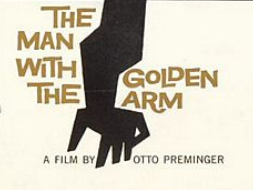
The Man with the Golden Arm, 1955, based on a novel by Nelson Agren, screenplay by Walter Newman, Ben Hecht, directed by Otto Preminger.
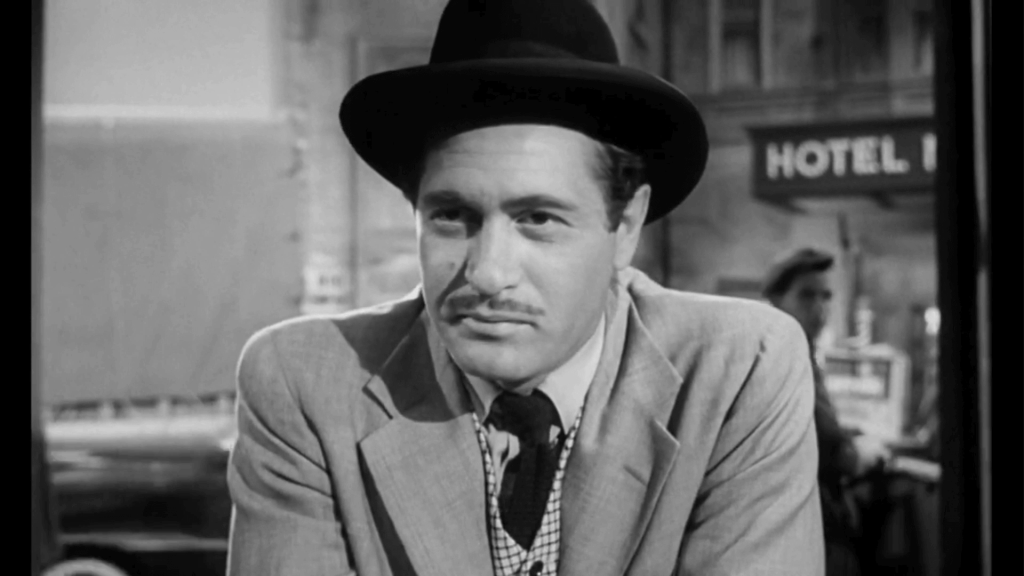
The varying distance between the subject and the camera can suggest varying degrees of fear felt by the protagonist (application of the stakes and risks factor).
Fresh out of rehab, poker dealer Frankie Machine returns to his squalid Chicago neighborhood, nurturing the dream of starting a new life as a jazz musician (stakes). But his old gambling boss, his dealer and his wife pressure him to return to his old ways (risk).
Frankie tells his dealer that he’s off drugs. Louie doesn’t believe him (“The monkey never dies”) and announces: (“I’ll be around”).
The threat of the dealer’s inescapable pull is palpable. It is represented by a tracking shot and a close-up of Louie’s face wearing a cynical grin.
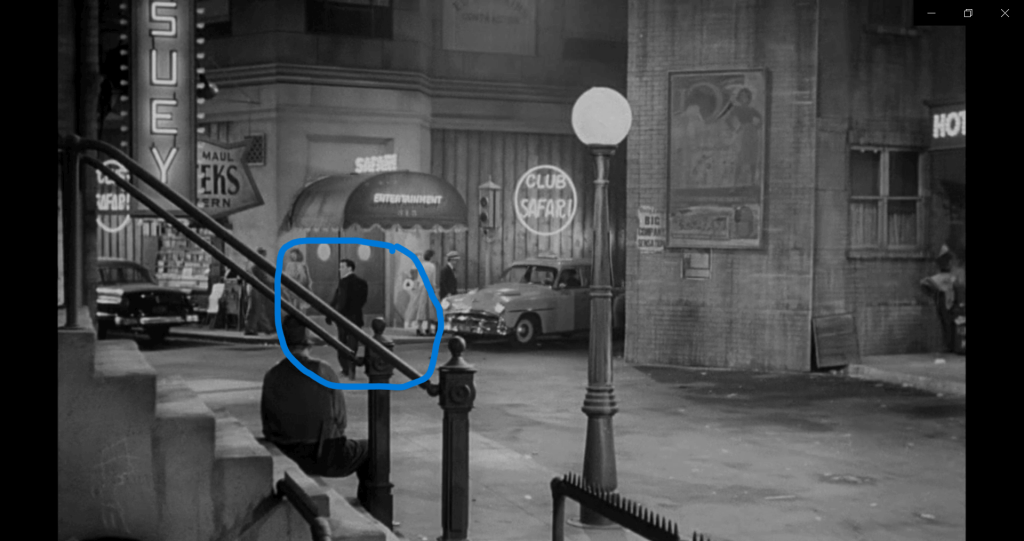
Following another encounter with Louie, some of whose words are identical (repetition factor) (“I’ll be around”), Frankie walks towards the night club where his mistress Mollie works. The camera doesn’t follow him, he walks away from us. A growing empty space engulfs him, suggesting a sense of solitude in the face of an omnipresent threat.
When Frankie’s old sensations return, and the threat of a possible fall becomes clearer, the camera moves closer to the protagonist’s face. Proximity is proportional to the intensity of feeling:
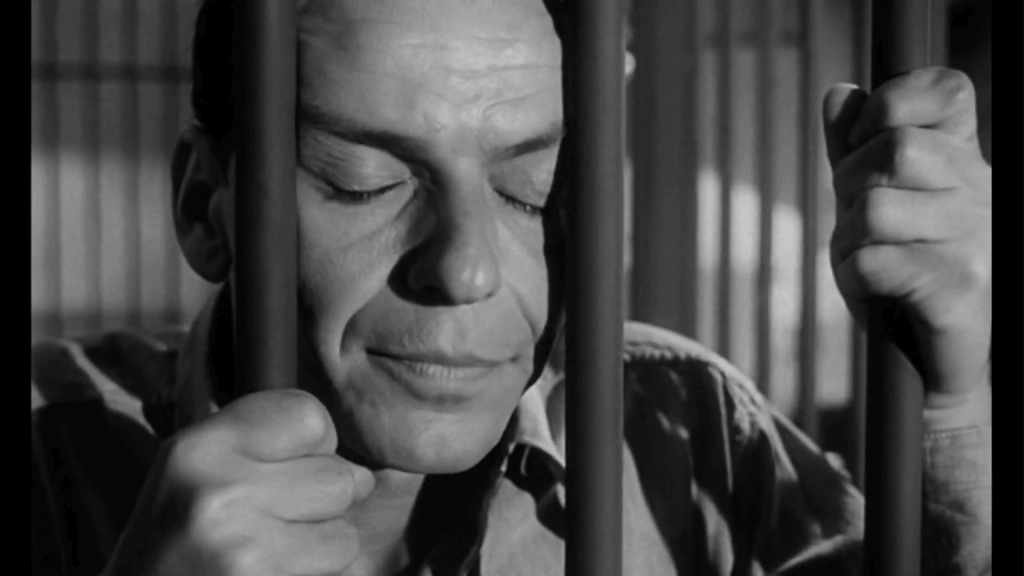
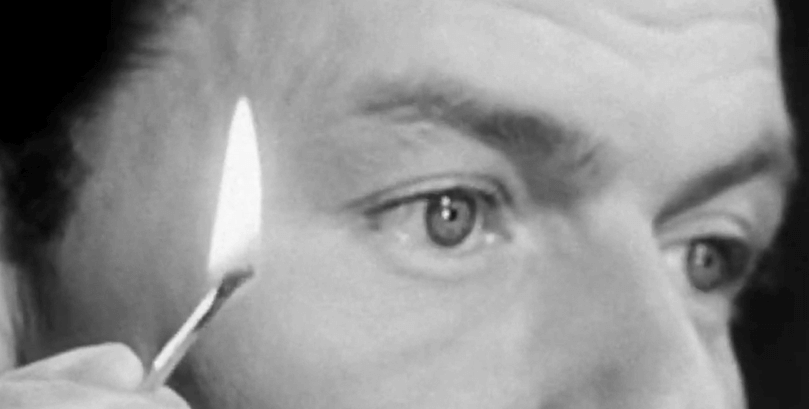
But when the inner turmoil is uncontrollable due to the effects of the drug, the distance from the camera to the subject becomes so short that the sudden inflation of information in the frame makes us uncomfortable. A cinematic narrative effect (an extreme close-up) succeeds in making us share the protagonist’s feelings.