Groundhog Day), 1993, Directed by Harold Ramis
A plot can indirectly take on an argumentative value (retention factor).


Groundhog Day), 1993, Directed by Harold Ramis
A plot can indirectly take on an argumentative value (retention factor).

The Man with the Golden Arm, 1955, directed by Otto Preminger
A slowdown in a character’s reaction can signal the occurrence of a dilemma caused by an intrapersonal obstacle.
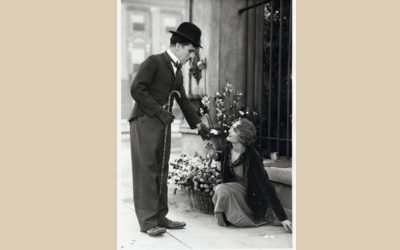
City Lights, Charlie Chaplin, 1931
The dominant traits of secondary characters are sometimes chosen based on the obstacles they can potentially represent for the protagonist (cohesion factor).

Casablanca, directed by M. Curtiz, 1942
What is not known about a character (retention/mystery) can lead the receiving agent to formulate hypothesis.

Groundhog Day, 1993 Directed by Harold Ramis
The presence of an accessory element can be evidence of a narrative strategy (cohesion factor)

By choosing to ‘slow down’ the narrative by increasing the amount of information, the narrating agent can create a surprise (a narrative-descriptive tension point) that prompts a reflection.

The Man with the Golden Arm, 1955, based on a novel by Nelson Agren, screenplay by Walter Newman, Ben Hecht, directed by Otto Preminger.
The varying distance between the subject and the camera can suggest varying degrees of fear felt by the protagonist (application of the stakes and risks factor).
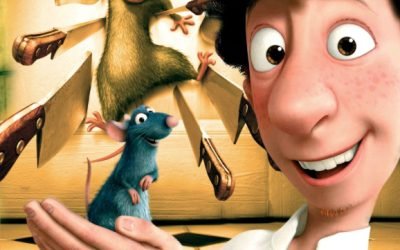
Ratatouille, written by LEWIS (Brad), 2007
Animated films and comic strips are laboratories for the treatment of believability. They allow us to push the limits of reality and the truths that a narrating agent believes they can deduce.
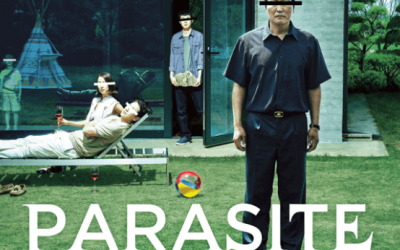
Parasite, 2019, directed by Bong Joon-ho
A plot can start with a central objective and generate a series of realistic or plausible obstacles. Once the objective has been reached and the plot is virtually finished, it can be “reloaded” with a new objective.

Discover here an extract from a narrative work, complete with commentary, to inspire you—whether you wish to emulate it, reimagine it, or do the exact opposite.

Discover here an extract from a narrative work, complete with commentary, to inspire you—whether you wish to emulate it, reimagine it, or do the exact opposite.
The Man with the Golden Arm, 1955, directed by Otto Preminger
The narrating agent can select elements in a world that are likely to hinder the protagonist’s pursuit of their explicit objective (application of the stakes-risks factor to a description).

Discover here an extract from a narrative work, complete with commentary, to inspire you—whether you wish to emulate it, reimagine it, or do the exact opposite.

Discover here an extract from a narrative work, complete with commentary, to inspire you—whether you wish to emulate it, reimagine it, or do the exact opposite.

Discover here an extract from a narrative work, complete with commentary, to inspire you—whether you wish to emulate it, reimagine it, or do the exact opposite.

Discover here an extract from a narrative work, complete with commentary, to inspire you—whether you wish to emulate it, reimagine it, or do the exact opposite.

Discover here an extract from a narrative work, complete with commentary, to inspire you—whether you wish to emulate it, reimagine it, or do the exact opposite.

Discover here an extract from a narrative work, complete with commentary, to inspire you—whether you wish to emulate it, reimagine it, or do the exact opposite.

Discover here an extract from a narrative work, complete with commentary, to inspire you—whether you wish to emulate it, reimagine it, or do the exact opposite.

Discover here an extract from a narrative work, complete with commentary, to inspire you—whether you wish to emulate it, reimagine it, or do the exact opposite.

Discover here an extract from a narrative work, complete with commentary, to inspire you—whether you wish to emulate it, reimagine it, or do the exact opposite.

Discover here an extract from a narrative work, complete with commentary, to inspire you—whether you wish to emulate it, reimagine it, or do the exact opposite.
Log in for more »
