
The Narrative Screenplay : Events, Surprise, Time
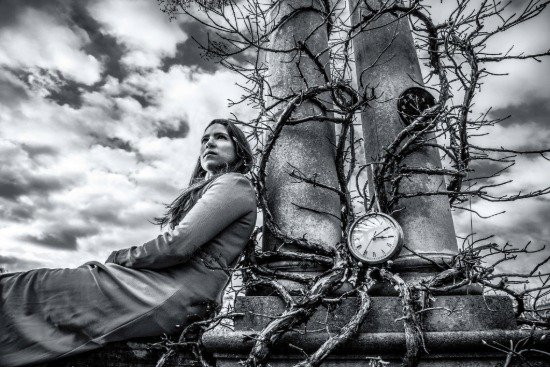
Vilija Skubute / Alamy Stock Photo
One day, someone, a Narrating Agent – as we call them on this website – has made the decision to report, in a narrative, events that happened in real life or in an imaginary world…
A screenplay that describes (narrates) at least one event is “narrative”
A narrative narrates at least one event inscribed in a temporal continuity (once upon a time… and then… finally.)
An event happens when:
• An action doesn’t provide the expected result.
• A mystery prevents the understanding of a situation.
• The protagonist’s course of action is complicated by a fact that is neither positive nor negative.
• An objective is achieved thanks to unpredicted or unpredictable circumstances.
• The style of a representation is original, unusual, unexpected.
Surprise is created.
What is
surprise?
What are the differences between a screenplay and all the other narrative literary and artistic works?
A screenplay is a transitional text.
Its function is to provide a vision of what the produced audiovisual or comic book will/could be.
It contains certain elements that will be represented (more or less) verbatim in the work (e.g., the dialogue), but a screenplay is always a incomplete narrative – the description of scenes, which are a constituent of the final narrative (film, TV episode, etc.)
What is a
scene?
Screenwriting is a collaborative process
The vision of the script is always completed by the visions of other narrating agents who intervene during the creation of the film or the comic book (directors, artists, actors, designers, musicians, etc.)
Their contributions are potentially capable of strongly influencing the representation of the plot and its characters, which is why the authors of a screenplay must always find common ground with the other narrating agents in order to safeguard the artistic integrity of the final work.
How to
collaborate?
Why is the concept of narrating agent particularly important in the case of audiovisual work?
Because it constitutes a potential for enriching audiovisual narrative and increasing its creative field, which has been largely neglected until now.
Since its birth at the end of the 19th century, it has been assumed that cinema should copy the theatrical set-up, namely the fixed, passive, “powerless” position of the spectator sitting on a chair and staring at a stage. We advocate here for a fuller use of the visual and sound of the camera as narrating agents.
The camera should not only be a technical instrument that enables a director to capture his/her aesthetic vision, but also a narrator that provides meaning, whose location and distance from the subject, the choice of what it captures or doesn’t, and the duration of its recording (editing) have the same revealing power as the words and sentences of a text.
What do
narrating agents
want?
