
How to Collaborate with Human Beings
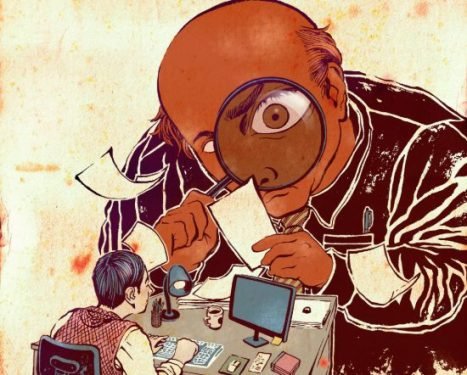
Fanatic Studio / Alamy Stock Photo
The two beliefs that make a human artistic collaboration counterproductive and futile
Belief 1. The other party is not capable of delivering an adequate result.
Belief 2. The other party rejects, systematically without foundation, any proposal.
In essence it means that each party take on one of the three roles of the fatal “triangle” described by a disciple of transactional analysis:
The Rescuer, the Victim and the Persecutor.
The roles can change during the course of the collaboration.
Tired of being infantilized, the “Victim” (the author) revolts (and becomes the “Persecutor”) against her “Rescuer” (the partner), when it is not the latter who, discouraged by the lack of “good will” of the “Victim”, transforms him/herself into an arbitrary and prescriptive “Persecutor”…
The Anglo-Saxons have an expression to describe the result: “development hell”, which refers to a long series of directionless revisions and rewritings, contradictory orders, internal struggles, and authors replacement…
Nine principles to prevent bad creative collaboration
1. There is no point in starting an artistic collaboration with someone whose abilities you doubt, or someone you suspect of doubting yours.
2. A partner (coach, consultant, commissioner) should not seek to help an author by submitting their own ideas and opinions (unless they stop being a “closeted author” and become officially a co-author).
3. A non-author partner should only encourage and guide the author’s self-diagnosis. The author should be the only one to identify the problems to be solved, so that no one comes to anyone’s “rescue”, the author does not feel victimized by any outsider’s injunctions, and the outsider does not bully anyone with his or her “Toxic Boss Syndrome”, or “closeted author”.
4. There are insecure “Persecutors” who ask for their partners’ opinion and therefore seek to be “helped” (even if they don’t want help). The partner should explain that the only opinion that is relevant to them is that they are convinced that the author will succeed in producing a unique, personal, and valuable work.
5. The next step is for the partner to convince the “Victim” to investigate why they are seeking “help”, to identify the source of their insecurity. In this way, the partner avoids becoming a hostage (“Victim”) of the creators’ insecurities, of becoming a “Rescuer” or a “Persecutor”, who himself is not very sure of their partner’s abilities and is quickly drawn into recriminations that make the creation of the ideal work impossible.
6. The ideal work is the one that his/her creator obtains when they decides that there are no more “problems”…
7. The basic principle is that the author’s ideas, feelings and desires must be the starting point, and that the partner provides common sense insight and specific, technical, knowledge (e.g. the conditions of the market, the available means available, specific constraints, etc.)
8. Occasionally creators are irrational. They are unable to collaborate and persist in plunging headlong into the abyss of unfinished and unpublished works. No one can save them (unless, of course, their names are Baudelaire, Mozart, Jean-Luc Godard, David Simon, etc.).
9. Sometimes the problems identified by an author are too general or vague:
I’m out of ideas.
I can’t get my ideas across.
My story no longer inspires me.
I’ve lost my motivation.
I don’t know what my character wants anymore.
It’s not original enough, bold enough, visionary enough, etc.
It’s not “working,” I want to change my story.
I hate my story.
No one will be interested.
It’s not entertaining enough/too entertaining.
Etc.
The partner has a role to play here in encouraging the author to accept the idea that their problems are mere consequences, and that the solution is to dig deeper to find the causes.
The most productive artistic collaboration focuses on identifying the cause of problems.
Coming together is a beginning.
Keeping together is progress.
Working together is success.
— Henry Ford
