
The content on this page undergoes regular updates and additions.
The world of the plot : Avenues of reflection and resources
-
More questions about the worlds of a plot:
– What time period is the plot set in?
– What is the time frame?
– What are its geographical boundaries?
– What is its social structure, its political organization, its power issues?
– How does its economy work (how do people make a living?)
– What are its rituals?
– What are its own Its own values? (what’s possible and desirable)
– What is its own criteria of probability? What is permissible and what is not?
– What are its problems? Who are its enemies?
– What do you think are the advantages/disadvantages of this world?
– To what extent is this world a metaphor for the protagonist’s main problem? (For example, in Casablanca, the city is intended to be neutral like Rick).
– What do you know about this world that others do not?
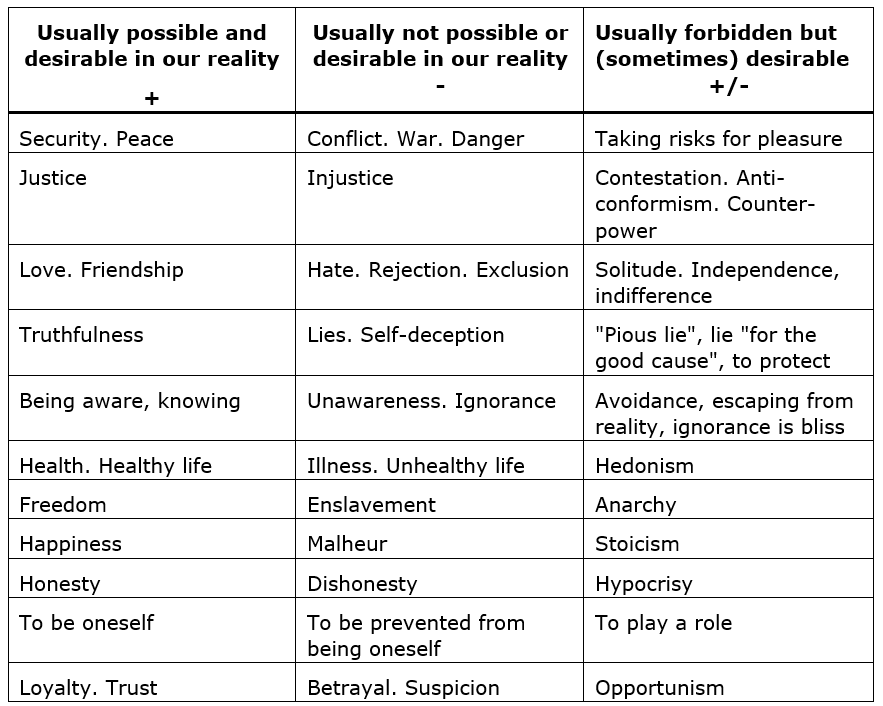
• An (incomplete) list of values :
It is worth keeping in mind that what is possible and desirable in one world may be impossible and undesirable in another.
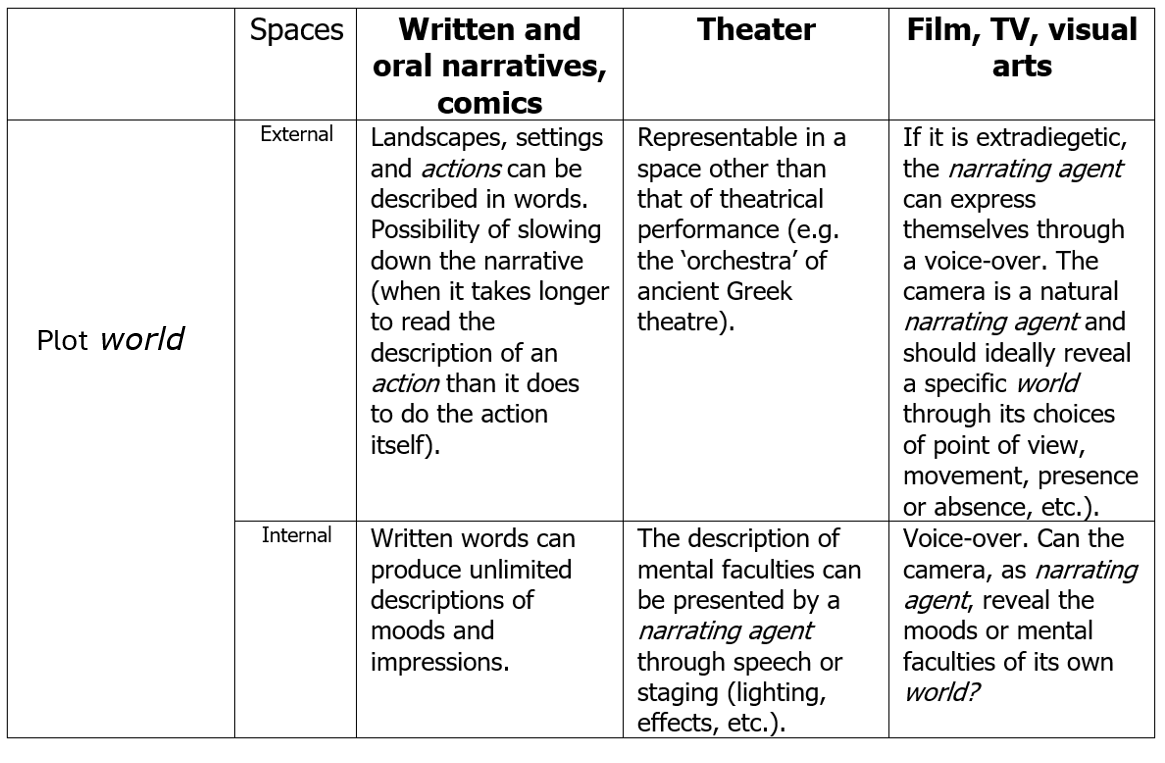
• The world of the main plot of an episodic narrative (TV series, multi volume books, comic book series, etc.) must generate a constant flow of obstacles with a high potential for surprise and revelation (e.g., a hospital emergency room, a police station, a group of mobsters, a dystopia, etc.). Otherwise, the insufficiency of events generated by the world of the plot must be compensated for by events related to the inner world of the characters (e.g., Six Feet Under, Friends, Ten Percent, Mad Men)
[…] It gave me everything one could ask for in a work of fiction: the re-creation of a world that envelops my own and belongs to it, that transports me and enlightens me, that imposes itself on me forever with the clarity of an experience I could have lived myself.
